


Quiet the Noise
The Five Senses Winter Edition 2025
About
15th December, 2025
There are moments that cannot be defined, only felt. On the ridge between dusk and dawn, when fog softens the light and the world becomes briefly weightless, seeing becomes sensing. The Five Senses winter edition invites a pause; a sanctuary of textures, echoes, aromas, flavours, and visions that stir the senses and soften the world’s relentless pace.
Featuring Ruth Asawa, Hamnet directed by Chloé Zhao, 'The Room of Strength' by Nikomachi Karakostanoglou, Perfumer H and more.

Quiet the Noise - A Winter Passage
Winter has always felt to me like a room the year slips into — a quieter chamber, where the senses do not dim but sharpen. I have been thinking about how much of our inner life is carried through touch, scent, breath, stone, sound; how the smallest gestures become a form of grounding when the season asks us to turn inward. This year, I found myself drawn to artists, thinkers, and practices that embody a decelerated attention — a way of feeling more, not less, in the darker months.
Five Senses Winter Edition
SIGHT
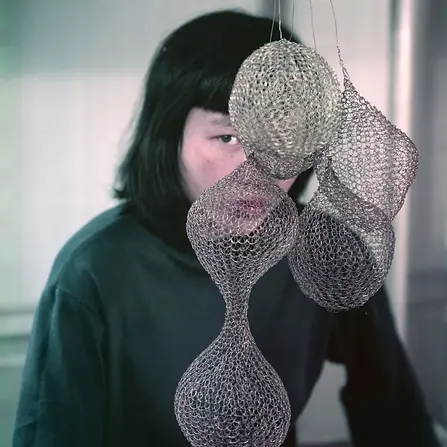
Photo: © Imogen Cunningham Trust and Estate of Ruth Asawa / David Zwirner Gallery
Asawa, the daughter of Japanese immigrants, spent her youth in an internment camp during WWII. Persecuted for her origins, shaped by rupture and displacement, she carried a history that could have closed her inward. Instead, she transformed it.
As the article writes: “Just as her sculptures teased a supple elegance from coarse materials… Asawa’s career embodied a sort of defiant hospitality.”
A woman working in an abstract idiom that might have signalled placelessness instead forged an art of connection — “a flinty determination to be, and to make others feel, at home in the world.”
Her work is not only about form. It is about the quiet force required to remain open in a world that tries to close you.
Ruth Asawa — Form, Resilience & Defiant Hospitality
One morning at MoMA, standing before Ruth Asawa’s suspended wire forms, I understood again that winter clarity: beauty as attention stretched into time. Her nets of light and vessels of shadow feel like breath made visible — a practice in perception, not display. Days earlier I had read in The New Yorker how, at Black Mountain College, she woke before dawn to rouse Josef Albers, the Bauhaus colour theorist, so they could watch the sun rise through fog on the hills. A ritual of attentiveness. A quiet, deliberate opening to the day.
And there is another layer — the one that stays with me most.

Photo: Ruth Asawa Looped-Wire Sculpture

Winter as a Kiln of Stillness — Porcelain as a Product of Slowness
I kept thinking of Edmund de Waal, whose devotion to porcelain is a devotion to patience — to material transformed only through time, precision, and fire.
Porcelain is never made quickly. Its refinement depends on stillness, on the exact heat that reveals its translucence, on a slowness that cannot be rushed. Winter works in the same way.
It strips the world back to essentials, enforcing a quieter rhythm in which form, thought, and feeling are tempered.
As de Waal writes of clay under fire, there is always a moment when something fragile becomes something clear. Like porcelain emerging from the kiln, winter tempers us — burning off the noise until only what is essential remains.

Photo: ©Venetia Kapernekas - I Bijoy Jain, Bamboo Study 2025 Bamboo | pigment, Muga silk | work courtesy of Salon 94
Alev & Bijoy Jain — Quiet Forms
I returned to Alev Ebüzziya Siesbye, whose porcelain bowls hold silence with a kind of sacred precision, horizons turned inward, shaped through breath and restraint.
In the Salon 94 presentation, her work met the elemental architecture of Bijoy Jain / Studio Mumbai. His “Bamboo Study” bench, woven from bamboo and Muga silk, becomes a resting place for the eye; a structure built from shadow, rhythm, and air.
Together, their works suggest a shared belief in slowness, that form can be a form of stillness, and stillness a form of care.

Photo - Vibrations, 2025, Salon 94, NY
Five Senses Winter Edition
SMELL


Photo: Perfumer H - White Smoke 100ml Handblown Bottle
Perfumer H — White Smoke
Scent, in winter, becomes its own landscape.
I still remember discovering White Smoke at Perfumer H during the cold months in London last year, when my daughter was facing health challenges and every breath felt like a negotiation with time.
This fragrance — an amber summoning an ethereal veil of smoke — rests on smouldering woods, roman chamomile, orris absolute, geranium, cinnamon leaf, agar, patchouli, tobacco, sandalwood, benjoin resin, white musks, vanilla, and amber.
It feels like walking outside just before snow: the cold carrying its own soft radiance. I keep it near my desk, not always to wear, but
to inhale when I need to return to myself.
A winter ritual of a single breath.
Five Senses Winter Edition
TASTE

Sōrate — Tea as Threshold
There is a tea room in Soho, Sōrate, where the world contracts in the most beautiful way. You enter, and it becomes quiet. A cup passed from one hand to another becomes ceremony.
Sitting there this December, I realized how much I associate winter with warmth held between the palms — a taste that slows the day. Tea as a threshold between outside and in.

Five Senses Winter Edition
THOUGHT

Nikomachi Karakostanoglou — Light Held in Stone
At the Onassis Cardiac Surgery Center in
Athens, Nikomachi Karakonstanoglou created The Room of Strength — a sanctuary for patients, families, and the nurses who named it.
A space shaped like a womb, with a vast crystal at its center — a heart carved from a mineral that travelled from the depths of Brazil to Arizona and then to Athens. A sculpture of strength, calm, and healing.
The soundscape, composed by Afroditi Panagiotakou and Manolis Manousakis, plays in a 24-hour cycle: cicadas, scops owls, sea-breaths from Messinia and Epirus, tuned to the shifting light from morning to night.
Nikomachi speaks of creating a place for “the moment when one needs a breath to carry on.”
Stillness, light, stone — converging into renewal.
"The Room of strength" - Art installation with light and sound | 2025
7 * 5m | Quartz, Ytong block, wood 19
Photo credit: Stelios Tzetzias

Cycladic Stillness — A Greek Thread
One night, leaving a late event at The Met, I found myself wandering through the Greek galleries.
A single Cycladic figure stood illuminated, carved with the austere tenderness of an earlier world. These forms — distilled to essence — carry a philosophy without words: a belief in the elemental, in clarity, in the space between the body and the divine.
It reminded me that stillness is not an escape from life, but its deepest channel.
A thread back to my own origins.
A stone that teaches us to pause.

Photo credit: © Venetia Kapernekas - Cycladic sculptures
Photo credit: Cycladic sculptures at the Museum in Athens - Venetia Kapernekas

Hamnet — The Breath of Cinema
Recently, at the Angelika in SoHo, I watched Chloé Zhao’s new film Hamnet and felt grief and memory rendered as pure sensation; the forest breaths, the tremor of loss, the echo of what remains.
In her recent interview with The New Yorker, Zhao spoke about how “when you go into nature, you develop an embodied spirituality… a safety you feel when you become one with your surroundings.”
That belief moves through the film like weather. Its elemental imagery - wind, the rhythm of branches, light, breath - becomes a meditation on presence and mourning, a reminder that to feel deeply is to remain alive to the world. The film returned me to my early film studies, to the understanding that images can breathe, and that cinema can hold sorrow with extraordinary tenderness.
Ocean Vuong — Language as Sense, America as Weather
This winter I returned to Ocean Vuong, to the quiet ache of The Emperor of Gladness. His world, East Gladness, becomes a petri dish for recession-era America: the wounded, the recovering, the enduring.
Through small gestures, dialogue, memories, the repetitions of labor — Vuong encounters the contradictions of American life: its violence, its tenderness, its idolization of war, its disregard for the unhoused, its fragile addicts, its solitary elders, the bluntness of its prisons, the hunger that values quantity over nourishment.
And yet: belonging flickers. He shows how people living close to loss find each other — how language itself becomes a sensory organ, a warmth in winter.

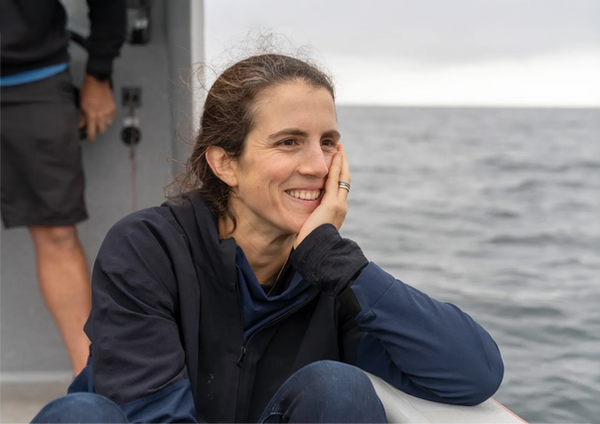
Photo: Tatiana Schlossberg off the coast of Santa Barbara in 2022. Photo Lauren Justice (published at The New Yorker)
Tatiana Schlossberg — The Human Warmth of Care
Tatiana Schlossberg’s A Battle with My Blood followed me like a quiet shadow this season. Known for her environmental journalism and her book Inconspicuous Consumption, Schlossberg writes here with a raw, fearless honesty about being diagnosed with leukaemia shortly after giving birth.
What moved me most was how she wrote about the nurses — the people who hold the world together in ways most never see:
“The nurses brought me warm blankets and let me sit on the floor of the skyway with my son. They looked the other way when I hid a contraband teakettle and toaster. They told me about their kids and their dating lives and their first trips to Europe. I have never encountered a group of people more competent, more full of grace and empathy… nurses should take over.”
Her words reminded me that healing is not only architectural or sensory, but profoundly human. The presence that asks for nothing.
The warmth that makes endurance possible.

New York — Breath Amid Rhythm
Here in New York, amidst the city’s relentless rhythm — the subways, the rush, the density — I move with intention. I return to Sui Yoga, a small warm room near home, where Yin classes soften the body and restore my breath.
Yin rests on three principles:
finding one’s edge,
resolving to be still,
and staying for time.
Long, quiet holds reach the deep connective tissues — not through force, but through surrender. A discipline of yielding, of letting gravity remember us.
In this demanding city, these rooms offer a rare stillness — a quiet recalibration before stepping back into the world.
Photo: Sui Yoga - Soho | New York
FIVE SENSES WINTER EDITION 2025
Quiet the Noise -
Winter invites us to pay attention — to the suspended, the inhaled, the sipped, the read, the held, the endured. To the quiet architectures of living. I hope some of these gestures accompany you, as they have me, into the year’s last deep breath.
“There is a crack in everything — that’s how the light gets in.” — Leonard Cohen
Warmly, Venetia